Transitioning from Winter to Spring Green-up
Green Image Spring Green-up Overview
So far, the winter of 2026 has brought bountiful snow and unusually cold weather. As we move into late winter, a warming trend has emerged in our region. Although we still may see lingering cold periods and snow, the National Weather Service has suggested a high probability of milder temperatures and more precipitation as spring approaches. The following information summarizes how harsh winter conditions may have affected some lawns, and what is in store for early spring lawn care.
Signs of Winter Lawn Injury
As snow and ice cover recedes across southeastern Pennsylvania, some lawns may show signs of winter injury, including snow mold disease, animal injury, and/or salt damage.
Snow mold
If snow cover persists into early March, homeowners may see gray or tan circular patches of matted grass, sometimes with a moldy appearance, in lawns after snow melts. These symptoms are evidence of a fungal disease that occurs under snow cover called gray snow mold. The disease is usually more prevalent where snow has been piled up from shoveling or plowing. Mature turf typically recovers when temperatures warm and turfgrass initiates active growth. Early spring fertilization and raking matted patches will hasten recovery from snow mold injury. However, areas that were seeded the previous fall may suffer thinning where patches occur, necessitating some spring seeding. Fortunately, this disease becomes inactive once snow cover vanishes and the lawn is exposed to sunlight; hence, treatment with fungicides is not needed.
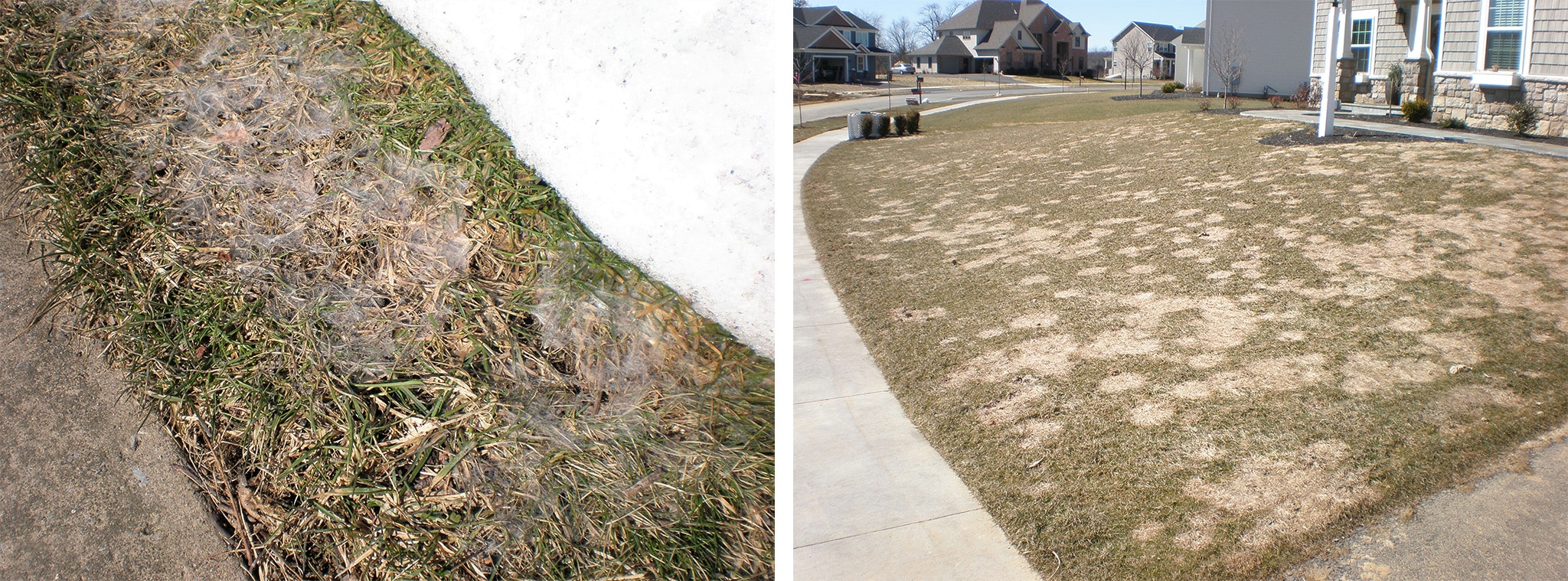
Grayish fungal webbing (mold) and matted turf from snow mold disease on mature lawn (left) and severe infestation of snow mold on lawn seeded with ryegrass the previous fall (right).
Animal injury
Animal-related lawn damage is a common occurrence following snowy winters. Patches of damaged grass resulting from dog urine can be distinguished from other problems by a central area of dead grass surrounded by a dark green border. The dark green color results from excess nitrogen in the urine. Patches become less visible as grass begins to green up.
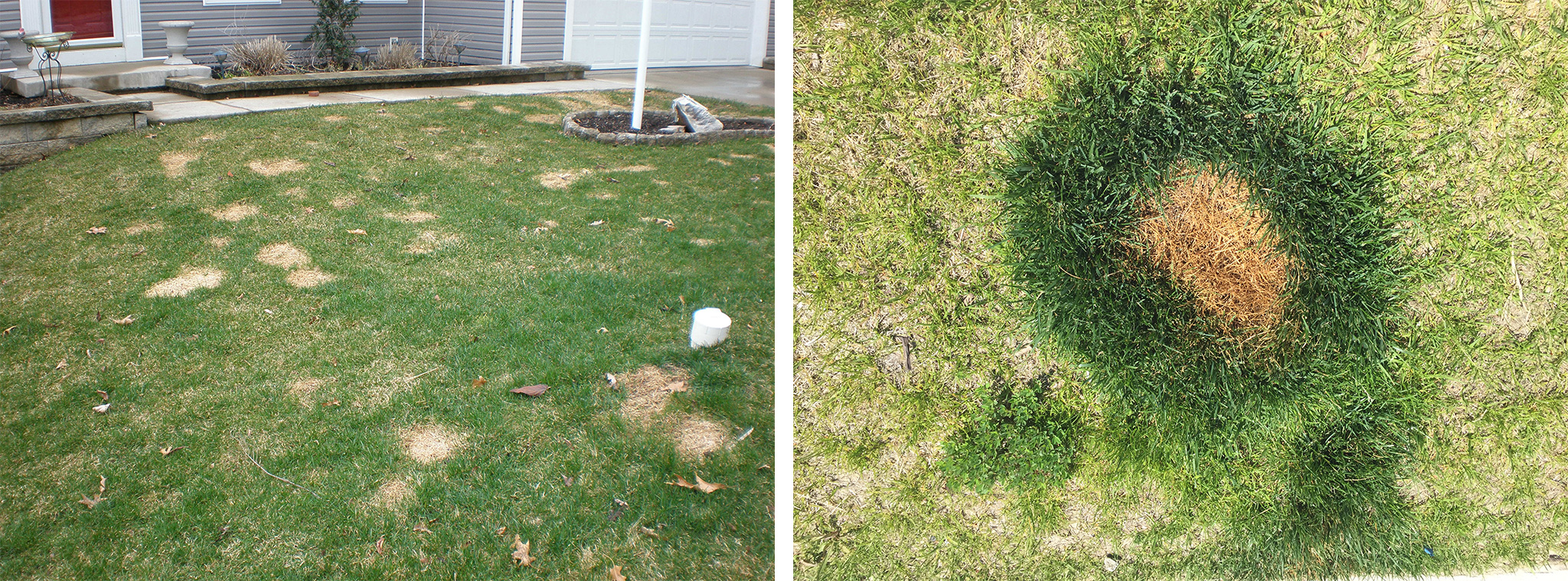
Signs of dog-related injury on lawn in early spring (left), and dark green turf surrounding dead zone resulting from excess nitrogen in dog urine (right).
Rodent tunnels, usually from voles foraging under snow cover, can be observed in lawns following snow melt. Unless damage is severe, tunnels typically fade from view as turfgrass begins to grow rapidly with the onset of warm temperatures and fertilizer applications.
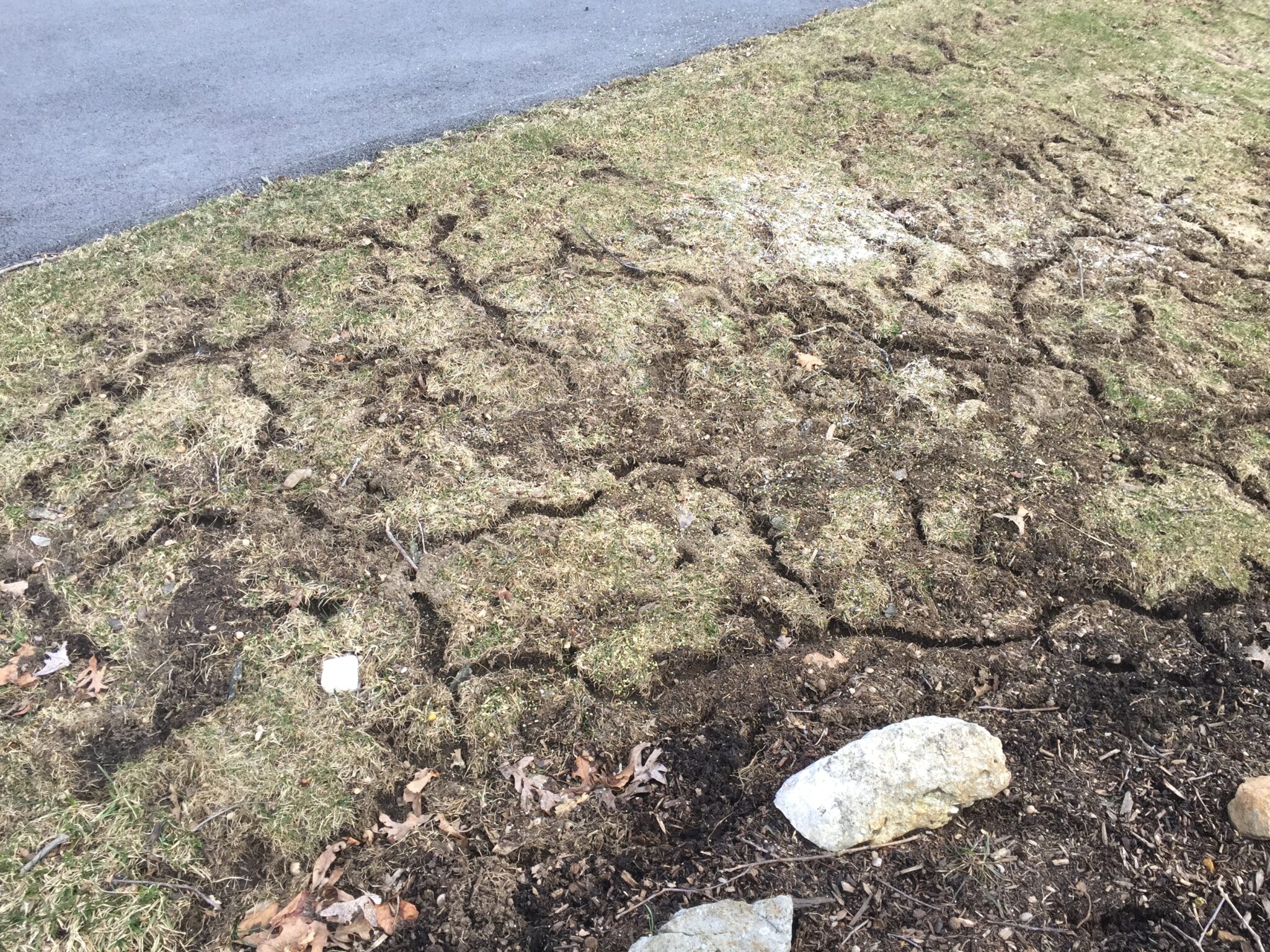
Lawn damage resulting from vole tunneling.
Salt damage
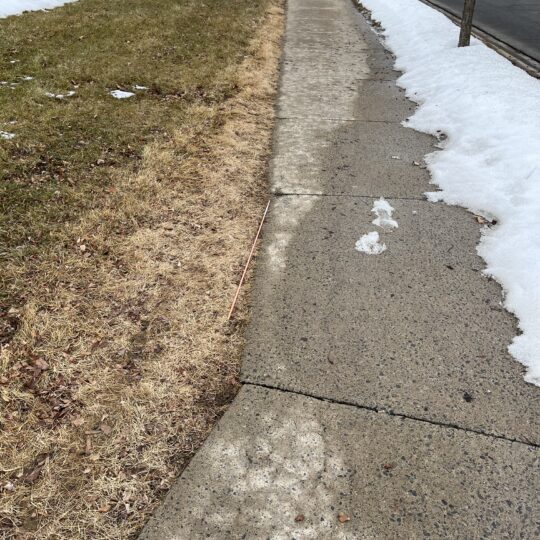
Ice formation was common on sidewalks and driveways through much of January and February. In many areas, sodium-chloride salt and other deicing agents were used liberally by many property owners to melt ice. When used in excess, dissolved sodium-chloride can wash into areas bordering treated pavement and injure turfgrass roots and foliage via dehydration. In most cases, damage only results in a thin strip along the pavement, and surrounding non-injured turf fills in damaged areas when temperatures warm in spring. However, this process takes time and patience is required. Early spring fertilizer applications can speed up recovery, once the salt is leached out of the soil.
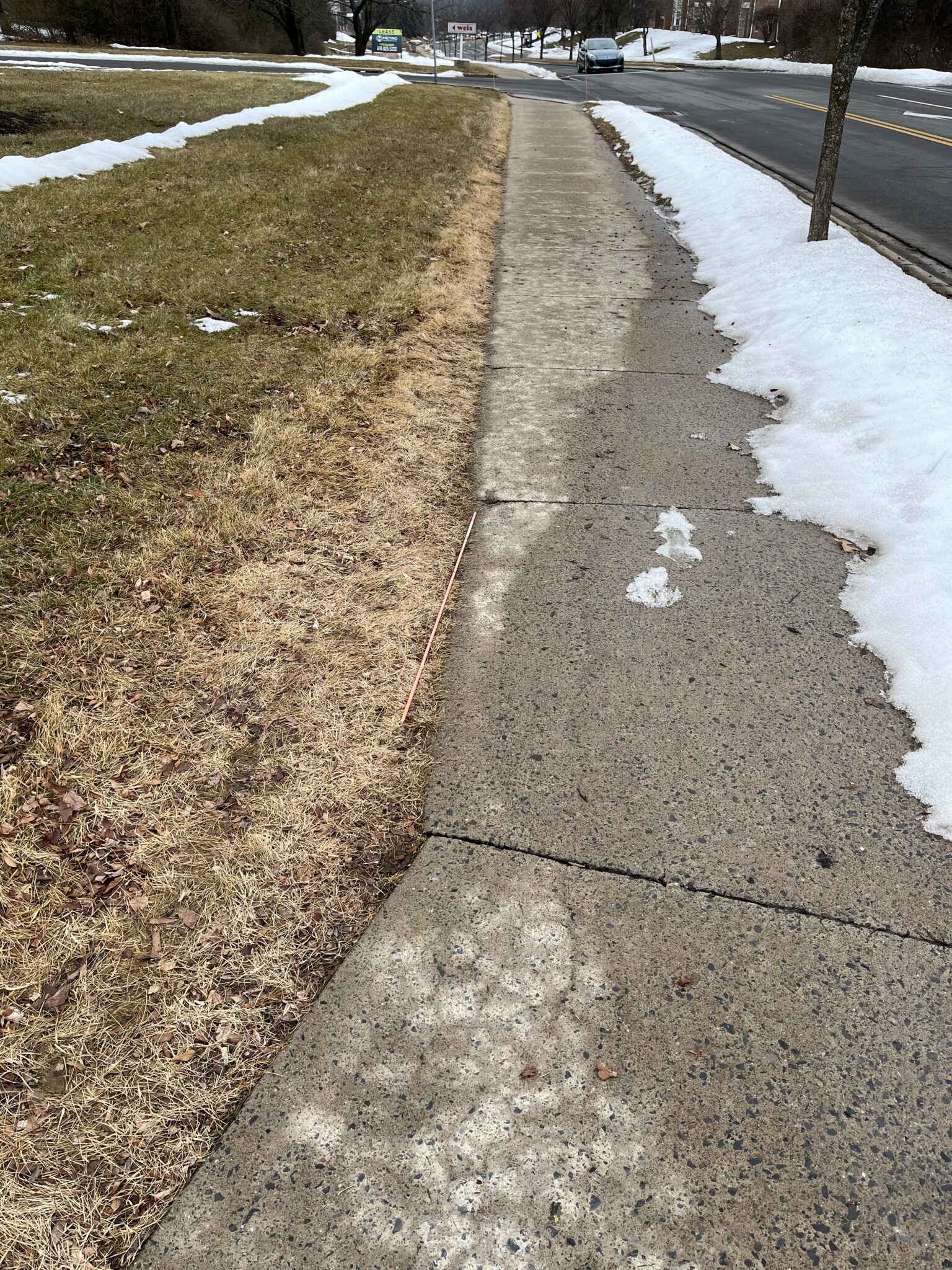
Salt injury along sidewalk.
Spring turf maintenance applications
In most years, lawn care practices begin in March, provided no snow cover exists. Given the amount of snow cover currently on the ground (especially near curbs and sidewalks where removal operations have left piles), and possibility of more snow events, first-round fertilizer and crabgrass prevent applications may be delayed by a week or two. Despite the possibility of delay, lawn care customers can be confident that there is adequate time for effective crabgrass control. In southern Pennsylvania, early crabgrass seed germination typically begins during the first week of May, with most seed germinating later in the month and some into June. To cover this long germination period, two applications of crabgrass preventer are used. The first application is applied before early germination occurs during the first week of May and the second application prevents late germinating seeds from emerging.
Seedling vigor and turf density
Seeding services last fall generally were more successful in f illing thin and damaged areas than in previous years where drought interfered with successful establishment. Young turfgrass plants are well equipped to survive winter conditions and should continue to push out new growth and thicken lawns once temperatures warm later this spring. Early spring fertilizer applications are designed to help new seedlings reach maximum growth potential, while providing mature turf a healthy start for the new season. Spring is the time of year in which turfgrasses produce the most foliar growth, and hence, vigor and density.
Spring disease control
Frequent, intermittent rains often accompany warm temperatures in early spring, leading to potential turfgrass disease problems. Spring diseases, such as leafspot and melting out diseases, can be controlled by timely preventative fungicide applications, thus allowing turf to remain healthy and vigorous going into late spring and summer.